Understanding AI Tokens
In the realm of artificial intelligence, AI tokens have emerged as a vital component that bridges the complex relationship between electricity consumption, computational power, and AI workload processing. As AI technologies become more integrated into various sectors, understanding what AI tokens are and how they function can empower participants and businesses alike to leverage their potential effectively. When exploring options, what are AI tokens serves as a foundational question that guides users through a landscape defined by computation and energy management.
Definition and Functionality of AI Tokens
AI tokens are the fundamental units of data that AI models utilize during training and inference processes. Essentially, these tokens serve as the building blocks for all AI interactions, encompassing not just language but also images and other forms of data. For example, a single token might represent a word, a part of a word, or a punctuation mark. Each time a user interacts with an AI model, such as requesting a response from a chatbot, their input is broken down into tokens that the model can understand. This tokenization process is crucial for the model's ability to parse input efficiently and generate coherent, contextually relevant outputs.
How AI Tokens Facilitate Machine Learning
When AI systems process data, they rely on tokens to measure usage in a manner similar to how electrical consumption is tracked in kilowatt-hours. The efficiency with which a model handles tokens directly impacts its performance and the cost associated with running AI applications. In many scenarios, tokens can be translated into billing units, allowing for a clearer understanding of the computational resources consumed during the execution of AI tasks. This integration of tokens with usage metrics enables better resource allocation and management in AI infrastructures.
Differences Between AI Tokens and Cryptocurrency
While both AI tokens and cryptocurrencies use tokens to represent value, their functionalities differ significantly. AI tokens are primarily concerned with computational processes, acting as units of consumption within AI frameworks, whereas cryptocurrencies serve as a medium of exchange, representing monetary value. AI tokens measure how much an AI model processes information, while cryptocurrencies facilitate peer-to-peer transactions across decentralized networks.
The Role of AI Tokens in Infrastructure
AI tokens not only function within models but also play a pivotal role in the infrastructure that supports them. They are essential in managing and optimizing the resources necessary for effective AI operations.
Supporting GPU Operations with AI Tokens
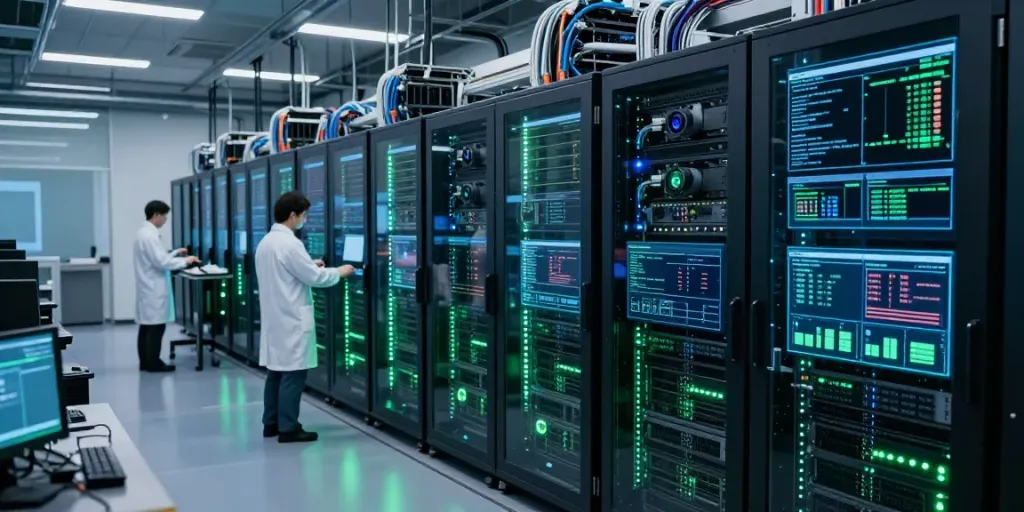
Graphics Processing Units (GPUs) are at the heart of AI computations, and AI tokens are instrumental in maximizing their efficiency. Every time a model processes input tokens to generate output, it consumes electricity. This cycle of token processing and energy use underlines the importance of a robust power infrastructure that supports GPU operations. By tracking the tokens generated through various computational tasks, organizations can effectively manage their power consumption and ensure that their AI infrastructures operate smoothly.
Electricity Consumption and Token Integration
The integration of electricity consumption with AI tokens creates a framework for measuring and managing the energy used in AI computations. Participants in the AI Token Economy can monitor their usage closely, providing meaningful insights into how energy impacts the efficiency and performance of their AI services. By understanding the correlation between electricity consumption and token generation, organizations can optimize their AI operations to be more cost-effective and sustainable.
How AI Token Metrics are Calculated
The calculation of AI token metrics is vital for participants looking to understand their contributions within the AI Token Economy. Typically, this involves recording the number of tokens processed for input and output, and comparing these metrics against the associated energy costs. By analyzing these metrics, organizations can make informed decisions regarding their AI infrastructure investments and operational strategies.
Navigating the AI Token Economy
For businesses and individuals interested in diving into the AI Token Economy, understanding how to navigate this landscape is crucial to maximizing benefits.
How to Participate in the AI Token Economy
Participation in the AI Token Economy begins with selecting the right power plan that aligns with an individual or organization's goals. Options may include basic, enhanced, or advanced plans that provide various levels of power support. By engaging in these plans, participants can contribute to the power needs of AI operations and, in turn, earn rewards based on their contributions.
Common Misconceptions About AI Token Value
Many newcomers to the AI Token Economy may confuse AI tokens with cryptocurrencies, leading to misconceptions about their value proposition. AI tokens are not investments; instead, they measure computational usage within AI frameworks. Understanding this distinction is crucial for participants to set realistic expectations regarding the benefits and rewards associated with token usage.
Real-world Applications of AI Tokens
AI tokens have several real-world applications, spanning industries such as healthcare, finance, and retail. For instance, in healthcare, AI tokens can be used to process patient data through machine learning algorithms, enabling faster diagnosis and personalized treatment plans. In finance, AI models can analyze transaction data to detect fraudulent activities, relying on the efficient processing of tokens to deliver timely insights.
Challenges in Managing AI Tokens
As with any emerging technology, managing AI tokens comes with its own set of challenges that participants must navigate effectively.
Tokenization Pitfalls in AI Systems
One of the significant challenges in token management is ensuring accuracy in tokenization processes. Errors in token generation may lead to inefficiencies in AI operations, potentially resulting in increased costs and reduced performance. Organizations must implement rigorous testing and validation procedures to mitigate these risks.
Addressing Energy Efficiency in AI Operations
Energy efficiency is a critical concern in the AI landscape, especially given the substantial power demands of high-performance computing. By optimizing token usage, companies can significantly reduce their energy consumption and environmental footprint. Implementing energy-efficient practices, such as optimizing token management algorithms, is vital for sustainable AI operations.
Future Trends for AI Token Management
The future of AI token management is likely to be shaped by advancements in technology and increased emphasis on sustainability. Innovations in renewable energy sources and improvements in GPU efficiency will likely facilitate more sustainable AI token operations. Participants should stay informed about these trends to ensure they adapt their strategies accordingly.
Getting Started with AI Tokens
For those interested in getting started with AI tokens, a structured approach can provide clarity and direction.
Choosing the Right AI Infrastructure Plan
Selecting the appropriate AI infrastructure plan is the first step to participating in the AI Token Economy. Options vary based on power access—core, enhanced, or advanced—allowing users to tailor their plans to their operational needs and goals.
Reward Mechanisms Based on AI Token Usage
Understanding how rewards are calculated based on AI token usage is essential for participants looking to maximize their benefits. Typically, rewards are derived from the number of tokens processed and the efficiency of electricity consumption associated with those tokens. This formula enables participants to gain tangible rewards through their contributions to AI infrastructure.
FAQs about Participation in AI Token Economy
Answering common questions can help demystify the AI Token Economy for new users. Key inquiries might include how to calculate token contributions, who can join the infrastructure, and what happens when a power plan ends. Providing clear answers to these questions fosters a better understanding and encourages broader participation.
What are AI Tokens and Their Importance?
AI tokens are crucial in facilitating efficient AI operations by providing a scalable measure of resource usage. Their role in managing and optimizing AI workloads is pivotal for enhancing overall system performance and reducing operational costs.
How Do I Calculate My AI Token Contributions?
Calculating AI token contributions typically requires tracking the total number of input and output tokens processed during a specific timeframe. Organizations should leverage automated tools to monitor their token metrics accurately.
Who Can Join the AI Token Infrastructure?
The AI Token Infrastructure is designed to be inclusive, allowing various participants—from individual users to large enterprises—to contribute. All that’s needed is a willingness to engage and a suitable power plan that aligns with the participant's operational goals.